Balcony Garden Design in Gurgaon Apartments: Plants, Layout & Weatherproofing
A balcony in a Gurgaon apartment can become a quiet morning coffee spot, a small garden, a place to read after work, or an extension of the living room. The challenge is that a balcony is not an indoor room. It faces direct sun, dust, strong seasonal weather, wind, rainwater and restrictions set by the apartment society. A design that looks attractive in a photograph may be uncomfortable or difficult to maintain in everyday use.
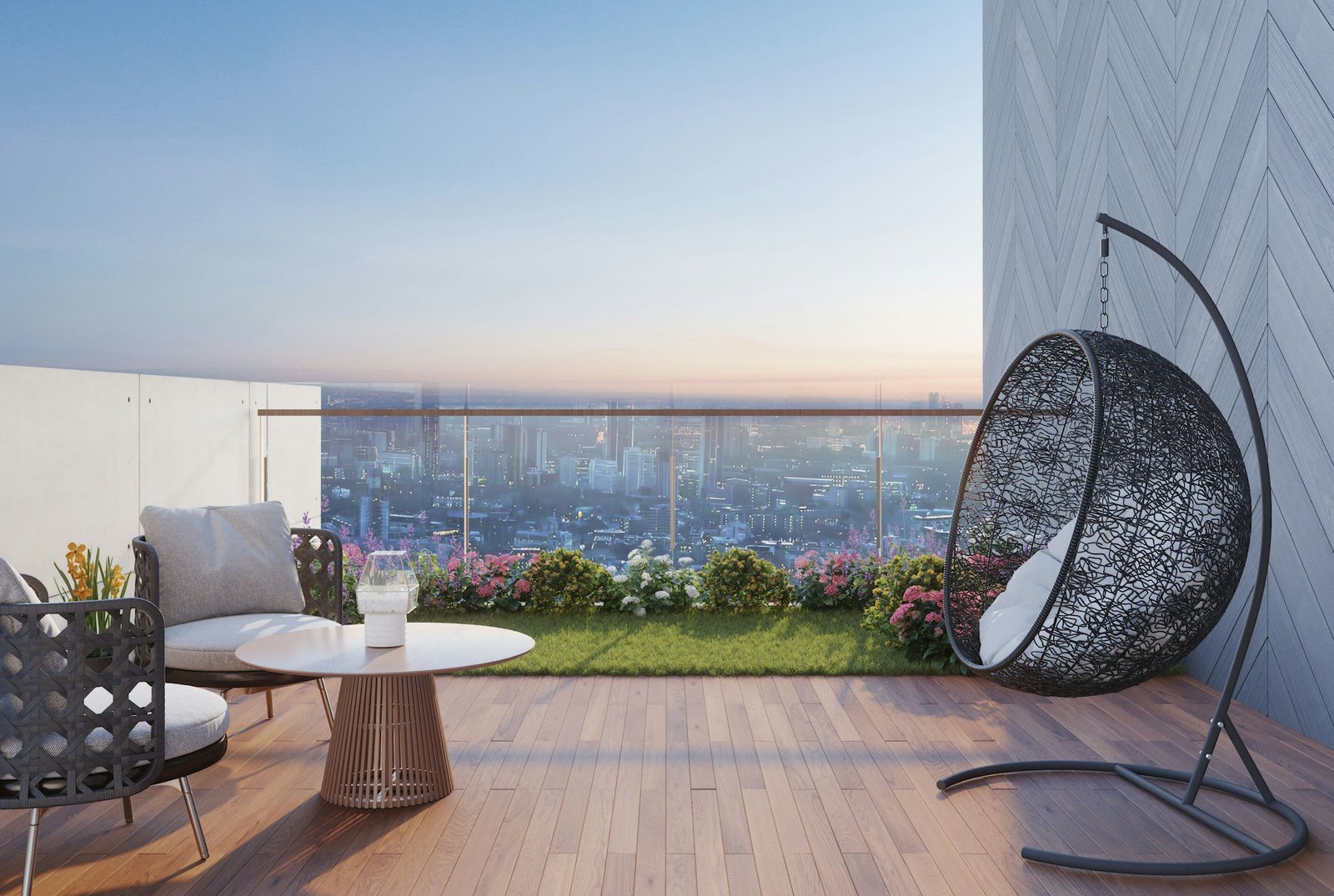
The best balcony garden design in Gurgaon begins with the way the space is actually used. Before choosing planters, decking or furniture, check the balcony’s sun exposure, drainage, wind, usable width and society rules. Then create a layout that leaves the door clear, keeps water moving towards the drain and gives every plant and piece of furniture a practical place.
Start with the balcony, not the decor
Measure the clear length and width, including any columns, door tracks, drain covers and projections. Note where the sliding door opens and how much space is needed to walk past it. A balcony that is narrow at one end may need a different arrangement from a rectangular one, even when both have similar floor areas.
Observe the balcony at different times of day. A west-facing balcony can become very hot in the afternoon, while a shaded or north-facing space may need plants that tolerate lower light. Check how much wind reaches the floor, whether rain blows in from the side and where dust collects. These observations will guide plant selection, seating and material choices far better than a mood board alone.
Keep a clear path between the home and the railing. Do not block the drain, emergency access or any service points with heavy planters. If the balcony has a narrow passage, use a shallow planter line or wall-mounted arrangement only where it is permitted and securely installed.
Choose a clear purpose for the space
Trying to fit a garden, dining area, swing, storage, yoga zone and lounge into one small balcony usually makes the result feel crowded. Choose one main purpose and one secondary use.
- Morning coffee corner: A compact chair or two, a small table and a few well-placed planters may be enough.
- Balcony garden: Prioritise plant groupings, accessible watering and enough room to inspect leaves and remove dry growth.
- Family seating: Select stable chairs with weather-suitable cushions and keep the route to the door clear.
- Reading or work nook: Consider glare, shade, power access and privacy before adding a desk or lighting.
- Flexible open balcony: Use movable seating and lightweight planters so the floor can be cleared when needed.
For many Gurgaon apartments, flexibility is more valuable than filling every corner. Furniture that can be moved for cleaning or during severe weather is often more practical than a permanent built-in arrangement.
Plan plants around Gurgaon’s weather
Gurgaon experiences hot summers, monsoon rain, cool winter spells and dusty conditions. A plant that thrives in a sheltered nursery may struggle on an exposed high-rise balcony. Ask a local nursery to recommend varieties based on the exact amount of direct sun and wind your balcony receives, rather than buying plants only because they look good together.
For sunny balconies
Choose plants known to tolerate stronger light once they are properly established, and introduce them gradually so leaves do not scorch after moving from shade. Group pots according to watering needs. A sun-loving flowering plant and a shade-loving foliage plant should not automatically share the same watering schedule.
For partly shaded balconies
Foliage plants can add texture without needing a large collection of colourful flowers. Place taller plants where they will not block the main view or create an obstacle. Rotate pots only when doing so is safe and practical, and check whether direct afternoon sun reaches the leaves through reflective glass.
For windy upper floors
Wind can dry potting mix quickly and damage delicate leaves. Avoid tall, top-heavy planters that can tip over. Use stable containers, keep climbing plants properly supported and secure any trellis or hanging pot with a suitable installation. Do not suspend heavy objects over public or neighbouring areas.
Plant recommendations are not universal: orientation, season, pot size and local microclimate all matter. Confirm the mature size and care requirements before buying. A small group of healthy plants is more effective than dozens of pots that are difficult to water and maintain.
Use planters that are easy to maintain
Planter choice affects both the look and the workload of a balcony garden. Large containers hold moisture longer but become heavy when filled with wet soil. Small pots are easier to move but may dry out quickly in summer. Choose sizes that match the plant’s root needs and the balcony’s practical limits.
Before placing several large planters together, consider the balcony’s permitted loading and ask the building management or a qualified professional if you are unsure about weight. Do not assume that a balcony can take any number of filled containers, stone benches or masonry planters.
Drainage is essential. Containers need suitable drainage holes, but water must not stain the facade, drip onto a neighbour’s balcony or create slippery patches below. Use appropriate trays or drainage arrangements that can be emptied and cleaned. Avoid letting standing water collect for long periods.
Keep access to the balcony drain visible. Leaves, soil and small debris can block outlets, especially during the monsoon. A simple routine of checking the drain and clearing loose debris can prevent a small maintenance issue from becoming a water-logging problem.
Pick flooring and finishes carefully
Outdoor flooring should be selected for exposure, drainage, slip resistance and maintenance, not appearance alone. Existing balcony tiles may be perfectly adequate if they are sound and drain correctly. Adding a new layer over them can affect door clearance, water flow and the finished floor level, so do not cover the original surface without checking these details.
Deck tiles or outdoor mats can make a balcony feel warmer, but they need to suit outdoor use and allow the surface below to be inspected and cleaned. Avoid products that trap moisture, obstruct drainage or become slippery when wet. Confirm that any installation is allowed by the apartment society and does not damage waterproofing.
Use finishes intended for exterior exposure. Materials that work well in a climate-controlled living room may fade, warp, corrode or deteriorate when exposed to sun and rain. For metal furniture and fittings, ask about corrosion resistance and care requirements. For wood-look finishes, check whether the product is rated for outdoor conditions rather than assuming all wood or composite products are weatherproof.
Create privacy without closing the balcony in
Balconies in high-rise communities can feel exposed to neighbouring homes. Privacy can be improved with carefully placed plants, approved screens or outdoor curtains designed for the conditions. Keep the solution proportionate to the balcony size: a dense screen across the full railing can reduce airflow, block daylight and make a narrow space feel smaller.
Before adding screens, artificial greenery, external blinds, planters on the railing or any facade-facing element, check the society’s rules. Many communities restrict changes that alter the external appearance or create a safety risk. Never attach an item to the outside of the railing where it could fall.
Plants can soften views, but allow enough space to reach the railing, clean glass and inspect drainage. A layered arrangement of low planters and one or two taller plants may create privacy without turning the balcony into a wall of greenery.
Choose furniture for real use
Measure furniture before purchasing it. Mark the footprint on the floor with paper or removable tape and check that the door can open fully and people can pass comfortably. Foldable chairs, stackable stools and compact side tables are useful when the balcony needs to serve more than one purpose.
Outdoor furniture should be stable and suitable for sun and moisture. Lightweight pieces are convenient to move, but they must not be so light that strong winds can shift them. Cushions should be easy to remove and store when rain is expected. If the balcony is uncovered, plan where cushions will go during the monsoon instead of assuming they can stay outside all year.
A swing or hanging chair needs particular caution. Do not suspend one from a ceiling slab, beam or railing without a qualified assessment and approval for the specific fixing and load. A freestanding alternative may be more practical, provided it fits safely and does not overload the balcony.
Lighting that feels warm and remains practical
Lighting can make a balcony inviting after sunset, but outdoor electrical work must be planned safely. Use fittings rated for their exposure, keep connections protected from rain and have a qualified electrician handle new wiring. Do not run loose indoor extension leads through a sliding door or leave plug connections where water can reach them.
A simple combination of a wall light, a suitable portable lamp and subtle plant lighting can be enough. Avoid excessive brightness that shines into neighbouring homes. If the balcony is used for reading, provide light where it is needed rather than lighting every corner equally.
Make the garden easy to water and clean
Maintenance is often what determines whether a balcony garden lasts. Decide how plants will be watered before finalising the layout. A tap may not be available nearby, and carrying water through the home can become inconvenient. Group plants with similar watering needs and leave enough room to use a watering can without soaking cushions or indoor flooring.
Automatic irrigation may be useful for a larger collection, but it needs a controlled water supply, reliable connections and a way to prevent leakage. It should never be installed in a way that risks water entering the home or dripping onto lower balconies. Test any system while someone is present and inspect it regularly.
Use potting media suited to the plants and containers. Garden soil can become heavy and compact in pots, while poor drainage can keep roots wet for too long. Ask a nursery for a suitable mix and follow care guidance for each plant. Remove fallen leaves, clean trays, inspect for pests and wipe furniture on a regular schedule.
Budget in stages rather than buying everything at once
The cost of a balcony garden depends on its dimensions, plant count, planter material, furniture, flooring, lighting, privacy treatment and installation requirements. A small refresh using existing flooring, a few plants and compact furniture can be very different from a fully designed balcony with custom planters, exterior finishes and electrical work. A single price without a defined scope is not a reliable estimate.
Start with essentials: safe access, healthy plants, appropriate containers, drainage and one useful seating arrangement. Live with the layout for a few weeks before adding decorative lighting, extra furniture or custom joinery. This staged approach helps reveal which features are actually used.
When comparing quotations, ask for a written list of included items, product specifications, installation charges and exclusions. Check whether delivery, waterproofing work, electrical changes, society approvals and maintenance are included or priced separately. If an estimate includes heavy planters or built-in elements, clarify how weight and fixing methods will be assessed.
Common balcony design mistakes to avoid
- Overcrowding the floor: Too many pots and chairs block circulation and make cleaning difficult.
- Ignoring the drain: A beautiful layout is not successful if water cannot leave the balcony freely.
- Choosing plants by appearance alone: Sun, wind and seasonal care determine whether they thrive.
- Using indoor materials outdoors: Exposure can damage finishes not intended for weather.
- Installing unapproved screens: Society rules and facade requirements must be checked first.
- Hanging heavy objects without assessment: Fixings and loads need qualified evaluation.
- Forgetting storage: Watering cans, tools and spare soil need a tidy, dry place.
- Assuming artificial grass is maintenance-free: It still needs cleaning and can trap debris or moisture below.
- Buying all plants at once: Start with a manageable group and learn the balcony’s conditions.
- Copying a photograph exactly: The reference may have different light, dimensions, drainage and exposure.
A practical balcony garden design checklist
Before ordering anything, complete this short checklist:
- Measure the usable floor area and door clearance.
- Observe sun exposure at morning, afternoon and evening.
- Check wind, rain direction and where dust collects.
- Locate the drain and confirm the floor slopes correctly.
- Read society rules for screens, planters, flooring and electrical work.
- Choose one main use for the balcony.
- Select plants based on actual light and care requirements.
- Confirm planter weight and safe placement.
- Choose outdoor-rated materials and stable furniture.
- Plan watering, cleaning and storage.
- Keep the railing, drain and access route unobstructed.
- Get qualified advice before structural fixings or electrical changes.
When professional interior planning helps
A compact balcony can be deceptively difficult to plan because each decision affects the next. A planter changes the walking route; a privacy screen affects airflow; new flooring can interfere with drainage; and a seating arrangement can block the door. Professional planning is especially useful for unusually shaped balconies, high-rise spaces exposed to strong wind, integrated lighting or custom-built elements.
Homework Design Studio works on residential interior planning in Gurgaon. If the balcony is part of a wider home project, start by reviewing the studio’s interior design services in Gurgaon and interior design consulting. For a lighter update rather than a full renovation, the studio’s home restyling services may also be relevant. Discuss the actual dimensions, society restrictions, maintenance expectations and budget before deciding on a scope.
A well-designed balcony does not need to be elaborate. It needs to suit the light, weather and daily routine of the people using it. When circulation, drainage, plant choice and maintenance are considered first, even a modest balcony can become a useful and attractive extension of the home.
Frequently asked questions
Which plants are best for a balcony garden in Gurgaon?
The right plants depend on direct sunlight, wind, season and container size. Ask a local nursery for options suited to your balcony’s orientation and introduce plants gradually when moving them into stronger sun.
How can I make a small Gurgaon balcony look bigger?
Keep a clear route from the door, use a restrained colour palette, group planters instead of scattering them everywhere and choose compact furniture. A few healthy plants often look better than a crowded collection.
Can I install wooden decking on my apartment balcony?
Possibly, but the material must be suitable for outdoor exposure and must not obstruct drainage, trap moisture or affect door clearance. Check society rules and the existing waterproofing before installation.
How do I protect balcony plants from summer heat and dust?
Match plants to the actual sun exposure, use suitable containers and potting media, check soil moisture regularly and clean leaves when needed. A screen may help in some locations, but it should not block airflow or violate society rules.
Can I install a swing on a high-rise balcony?
Do not attach a swing to a slab, beam or railing without a qualified assessment of the structure, fixing and intended load. Check building and society requirements first; a stable freestanding seat may be a safer alternative.
What should I check before hiring a balcony designer?
Ask for a measured layout, material specifications, drainage and watering plans, an itemised quotation, maintenance guidance and confirmation of what society approvals are needed. Clarify which services are included before work begins.


Related Posts
Wardrobe & Storage Design in Gurgaon: Costs, Materials and Planning Guide
Home Office Interior Design in Gurgaon: Smart Ideas for Apartments
West-Facing Flat Interior Design in Gurgaon: Practical Ways to Reduce Heat
Rental Flat Interior Design in Gurgaon: Deposit-Safe Ideas That Work
2BHK Flat Interior Design Ideas in Gurgaon: Layout, Storage & Budget
How Long Does a Full Home Renovation Take in Gurgaon? Realistic Timeline
Turnkey Interior Design Company in Gurgaon: What It Actually Includes
How to Get an Accurate Interior Design Quote in Gurgaon: Avoid Hidden Costs
Interior Design Firm vs Freelance Designer in Gurgaon: Pros, Cons & Cost
Best Time of Year to Start Your Home Renovation in Gurgaon
Interior Design Warranty & After-Service in Gurgaon: What to Ask For
Farmhouse Interior Designer Gurgaon: A Complete Guide to Luxury Farmhouse Interiors
Duplex Interior Designer Gurgaon: A Complete Guide to Planning a Luxury Two-Floor Home